No. 31 Appeals to Emotion
Sunk Cost Fallacy
In Turkish: Batık Maliyet Safsatası
We’ve sunk so much money into this boat that we have to sink a bit more.
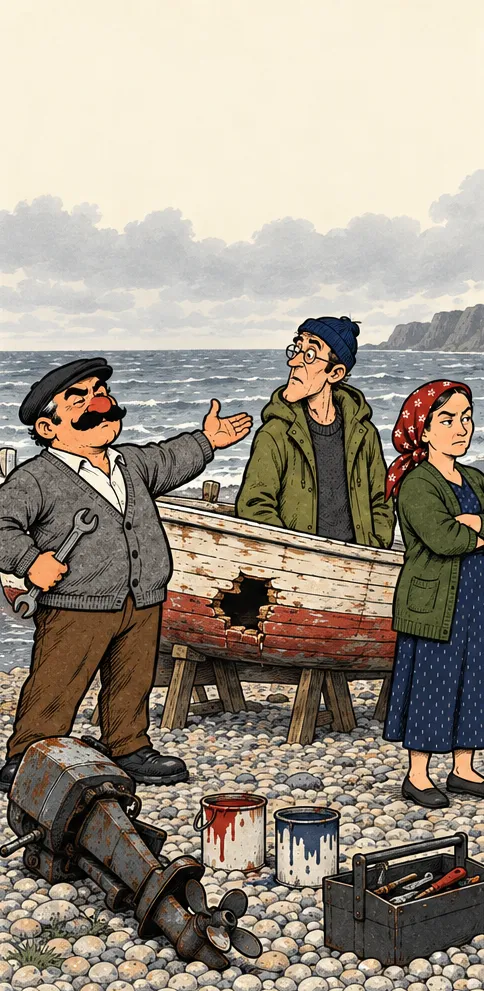
I’ve put three engines, two coats of paint and a new rudder into this boat. And now I should give up?
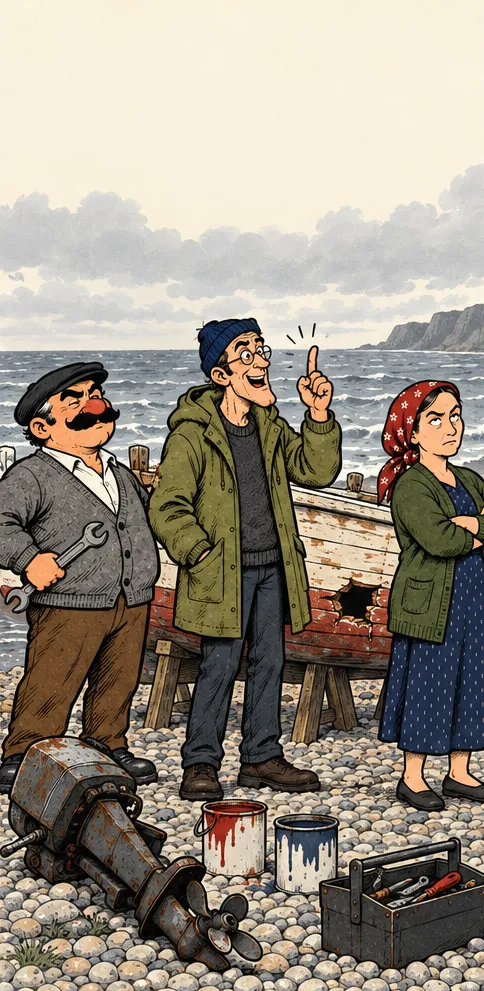
You’re right, Temel. Buy one more engine, and if that fails, another.
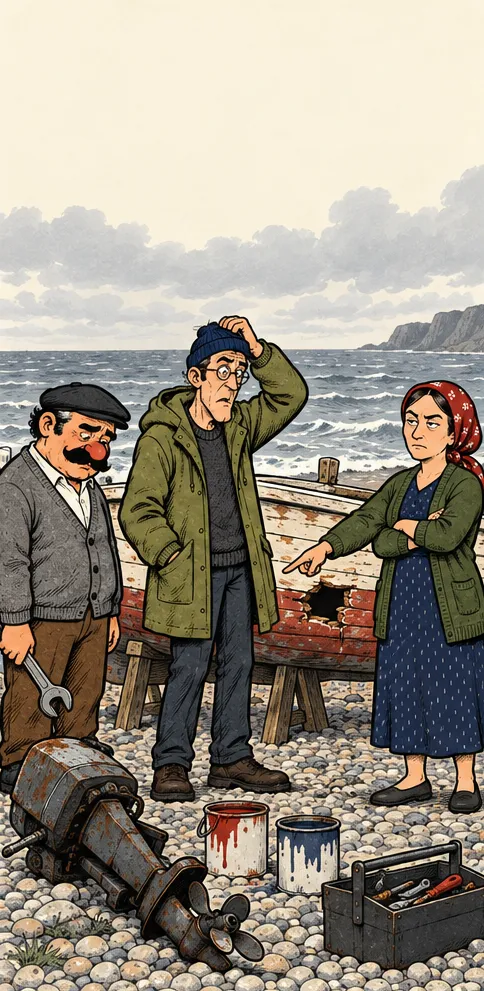
The money’s gone, Temel, it isn’t coming back. The question is whether one more engine makes this boat float.
What is it?
Carrying on with something because the money, effort or time already spent can’t be recovered. What’s spent is gone; whether to continue should depend on what comes next, not on what went before.
The pattern
- We’ve already put a lot of money / effort / time into X.
- If we stop now, all of it is wasted.
- So let’s carry on. (Whether carrying on will work is never discussed.)
Why it fails
People hate accepting a loss; quitting feels like stamping the money “wasted”. But it is spent whether you go on or stop. Going on doesn’t bring it back; it adds more on top. That’s why renovations never end, dead partnerships drag on for years and terrible two-hour films get watched to the end, all on the same sentence: “We’ve come this far.”
How to spot it
- The reason is always in the past: “we’ve spent so much”, “we’ve come this far”, “we worked so hard”.
- What continuing will bring from here on is never discussed.
- Stopping is made to feel like admitting the loss, as if continuing would turn the loss into something else.
What to say
Take the past out of the sum: “What we spent is gone, fine. If we were starting from scratch today, would we take this on?” If the answer is no, the only reason to continue is that saying no is hard. Then ask: “What will the next spend actually get us?”
When it’s not a fallacy
Continuing is often the right decision, as long as the reason is the future, not the past. “It’s nearly done and it’ll be useful when it is” isn’t a fallacy; it’s arithmetic. So is using what the spent effort taught you. The fallacy is seeing that it won’t work and carrying on anyway, just so the spending doesn’t count as wasted.
Examples
- WorkManager: “We’ve spent two years and a fortune on this software, we can’t stop now.” The two years and the fortune are gone either way; the question is whether one more year buys software that works.
- Family“We’re halfway through, it’s dreadful, let’s finish it.” You’ve given it an hour already; giving it a second one doesn’t get the first back.
- Shopping“I paid so much for these shoes, I’ll wear them even though they pinch.” The shoes keep pinching, and the money was gone at the till.
- School“I’ve done three years, I’ll finish even though I hate it.” Finishing may be the right call; but because the diploma is worth the year ahead, not because of the three years behind.