No. 28 Statistical Fallacies
Gambler's Fallacy
In Turkish: Kumarbaz Safsatası
Five heads in a row, so tails is due. The coin doesn’t remember.
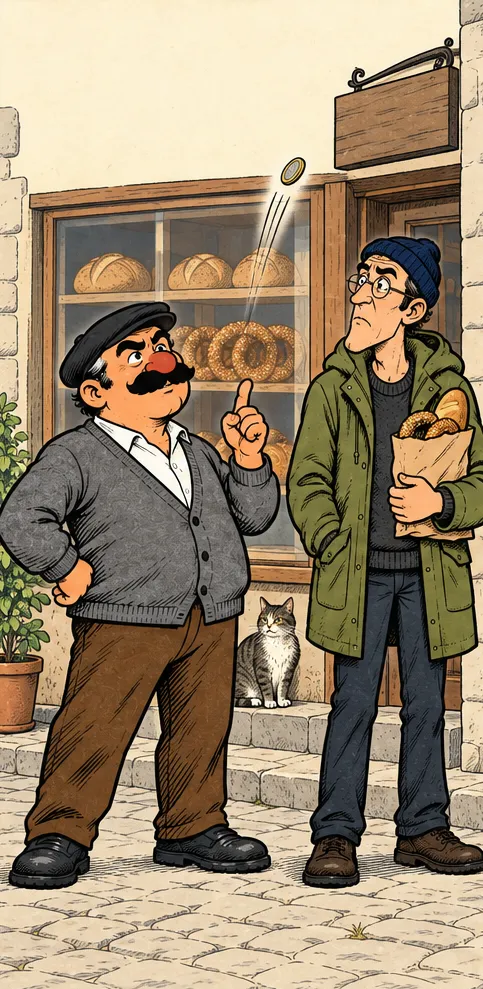
Five heads in a row. This one’s tails for sure, bread’s on you.
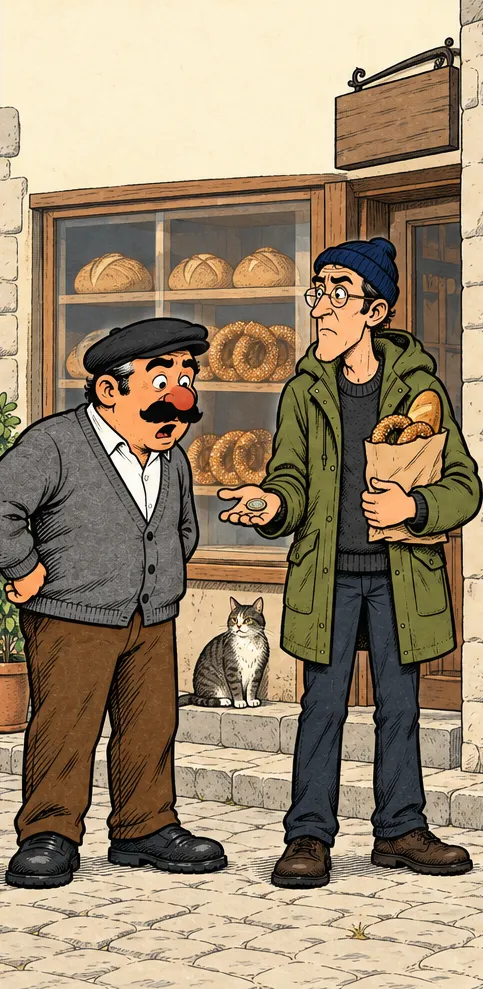
The coin doesn’t remember, Temel. Fifty-fifty every time.
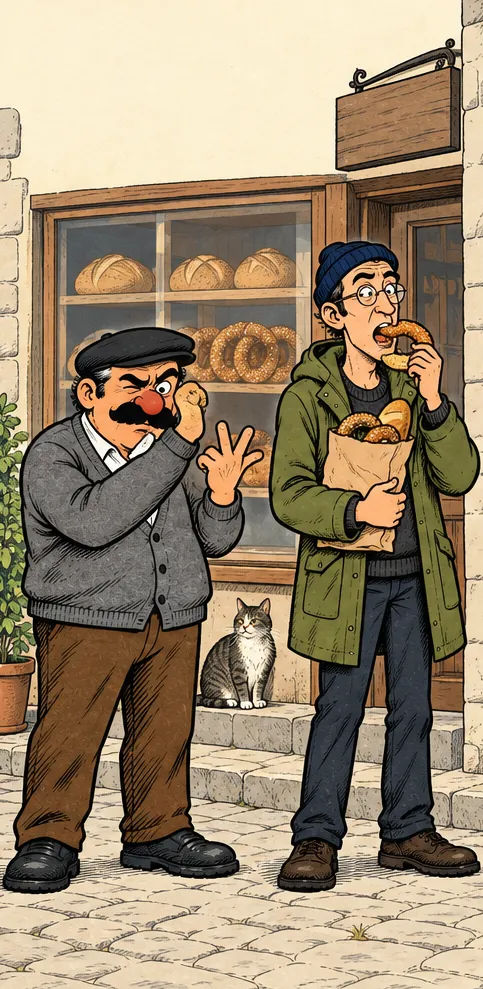
Six heads… This coin is broken.
What is it?
Believing that independent events will behave as if to make up for the past. After a run of heads, tails isn’t “due”; the coin doesn’t know how many times it has been tossed.
The pattern
- X hasn’t happened for a long time (or has happened every time).
- Therefore X is now more (or less) likely.
Why it fails
The brain believes in balance: if it’s fifty-fifty in the long run, it should even out in the short run too. But the long-run balance doesn’t come from correcting the past; it comes from drowning it in millions of future tosses. Every toss starts from zero. Casinos stand on this feeling; whoever says “it has to come now” keeps playing.
How to spot it
- The phrases “it has to come now”, “it’s my turn”, “it can’t go on like this”.
- Past results are used as if they changed the odds of an independent event.
- Playing more the more you lose: the feeling that “it’ll turn now”.
What to say
“Does this event remember the last one?” Coins, dice, lotteries: no. Then the odds are the same every time; say so and leave it. Ask the reverse too: “If it came up heads five times, is heads more likely? Neither.”
When it’s not a fallacy
When events aren’t independent, the past carries information: if an ace has come out of the deck, fewer aces remain; if a striker is out of form, his odds really have dropped. And the reverse: after five heads in a row, suspecting a rigged coin isn’t a fallacy, it’s sense. The fallacy is attributing memory to independent events.
Examples
- Family“Three girls, so this one’s definitely a boy.” Same odds every time.
- Football“He hasn’t scored in five matches, he’s bound to today.” Maybe; but the five matches carry no weight.
- Shopping“I’ve bought this ticket for three months, it’s my turn.” The lottery doesn’t keep a queue.
- Traffic“There’s never been an accident on this road, one is due.” Or the exact opposite; both are the fallacy.