No. 32 Appeals to Authority and the Crowd argumentum ad antiquitatem
Appeal to Tradition
In Turkish: Geleneğe Başvurma Safsatası
Your grandfather did it this way, you say. Your grandfather didn’t have a bridge.
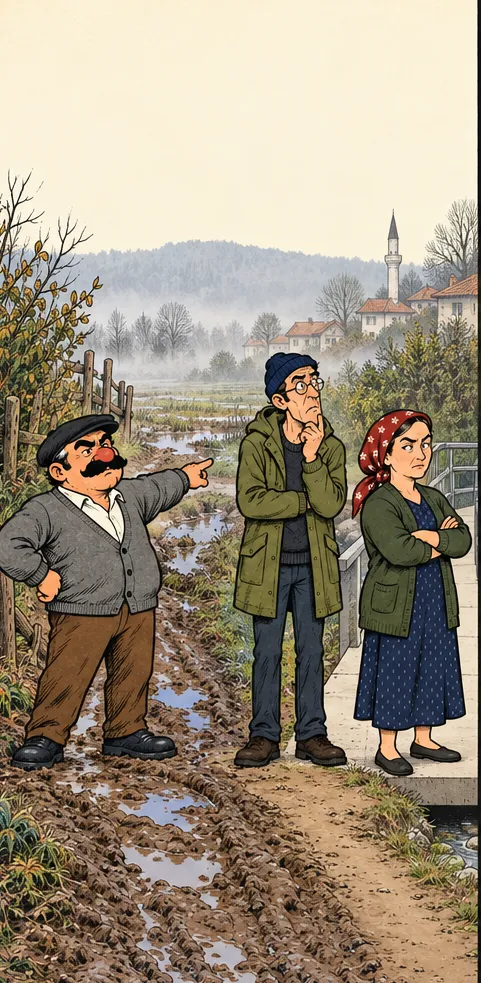
This is the way to the village. My father went this way, and his father.
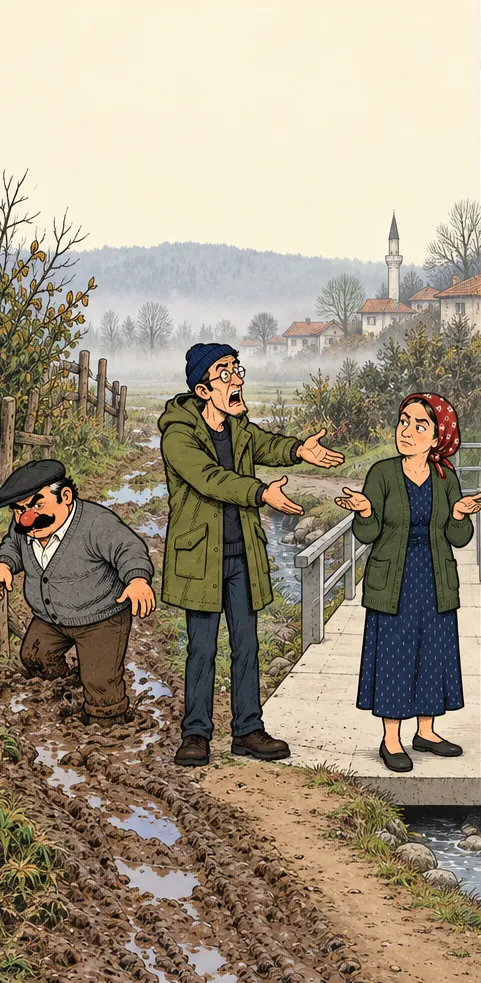
Temel, that new bridge has been standing there for two years. Five minutes, dry feet.
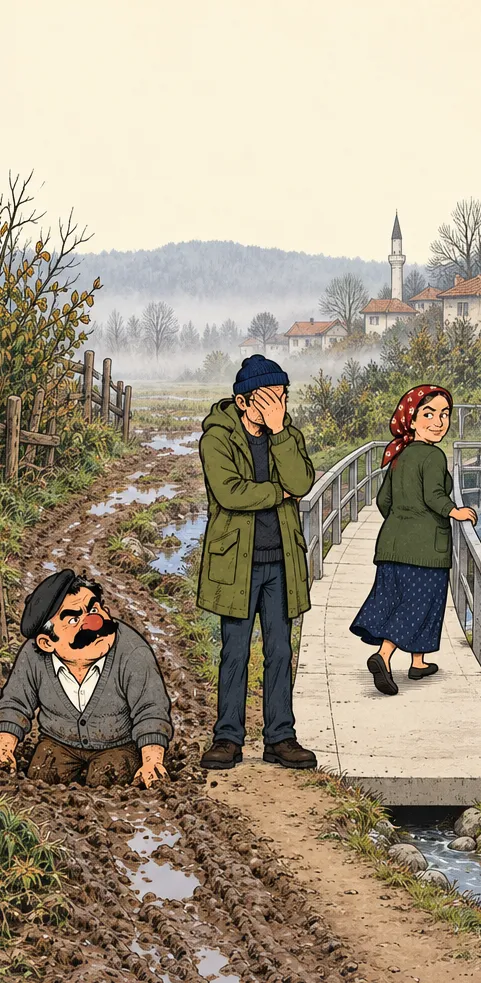
If your grandfather had seen a bridge he’d have used it, Temel. He didn’t love the mud. You do.
What is it?
Taking the fact that something has always been done a certain way as proof that it’s right or good. Age shows a practice has been tried; it doesn’t show it works, let alone that it’s the best. Some mistakes have been made for centuries.
The pattern
- X has always been done this way.
- Therefore X is right / should be done this way.
Why it fails
Tradition feels safe: tried, known, ours. That feeling isn’t empty; a practice that has lasted usually had a reason. But the reason is what does the work, not the tradition; once the reason is gone, the tradition stands on its own and starts answering “why?” with “because it always was”. That isn’t an answer.
How to spot it
- Phrases like “we’ve always done it”, “since forever”, “our elders”, “it’s the custom”.
- The question “why?” gets a date for an answer, not a reason.
- Nobody says what’s wrong with the new way; only that it’s new.
What to say
Ask for the reason behind the tradition: “Why did we start doing it this way? Does that reason still hold?” If it does, give the tradition its due; if it’s gone, the tradition is now just a habit. Then compare: “What does the new way do worse?” If the answer is nothing but “it’s new”, it’s the fallacy.
When it’s not a fallacy
There is usually accumulated experience behind something done for a long time; taking that experience seriously before switching isn’t a fallacy, it’s caution. Nor is “they’ve done it this way for a century, there’s probably a reason; let’s find it.” The fallacy is putting the age where the reason should be, without looking for the reason.
Examples
- Family“In our house pickles are always made in this jar.” The jar has been the same for fifty years; so has the mould on the pickles every year.
- Work“We enter this report by hand every month, we always have.” It’s entered by hand because it always was, and it always was because it’s entered by hand.
- HealthGrandma: “Swaddle the baby tight, we always did.” They always did; it was also found later that tight swaddling causes hip dislocation.
- Football“This club never changes the coach mid-season, it’s tradition.” Nobody has counted how many titles the tradition brought, or how many relegations.