No. 14 Missing the Point petitio principii
Begging the Question
In Turkish: Kısır Döngü Safsatası
It’s true because it’s true. The proof is the claim wearing a hat.
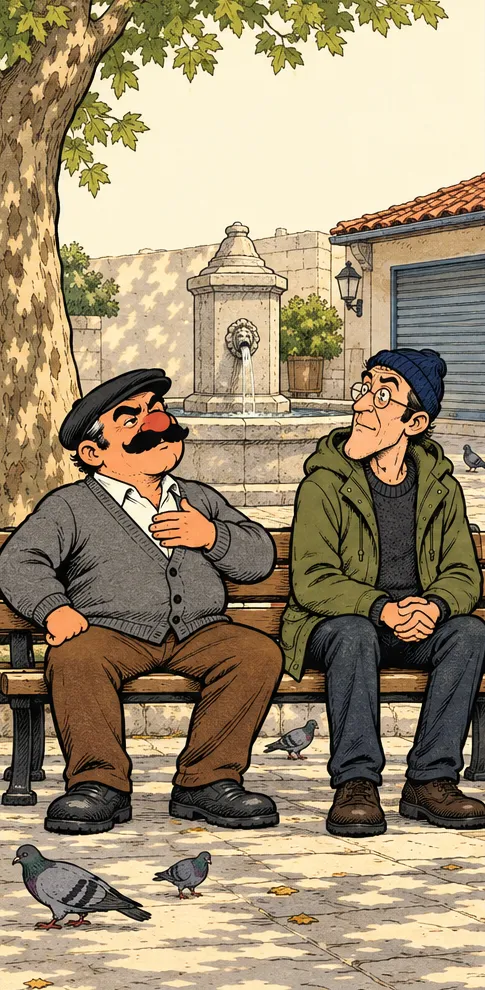
Şükrü’s the most honest tradesman in town. He never lies.
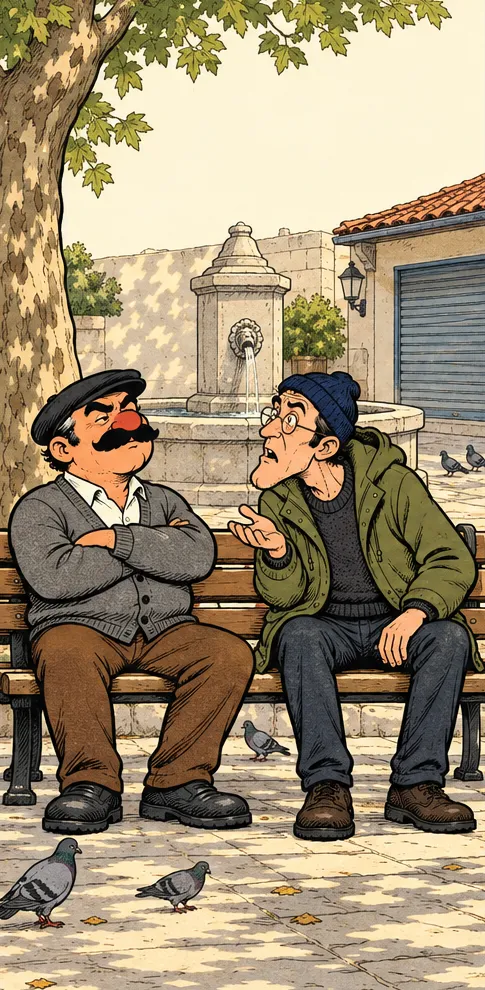
How do you know he never lies?
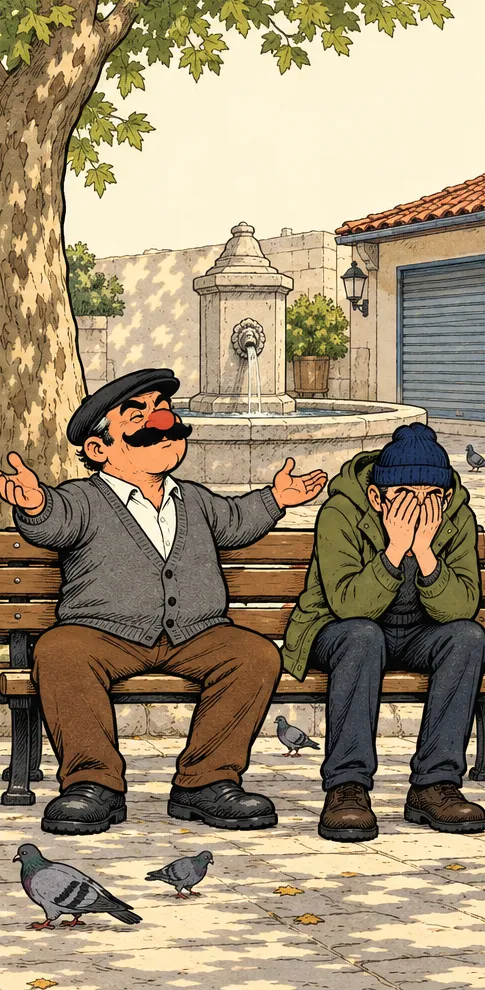
He told me himself. And he never lies.
What is it?
Assuming, inside the proof, the very thing you set out to prove. The premise and the conclusion say the same thing in different words; the argument eats its own tail.
The pattern
- X is true because Y.
- For Y to be true, X already has to be true.
- So: X is true because X is true.
Why it fails
The circle disappears when the words change. “He’s honest because he never lies” looks like two sentences but is one. As long as nobody stops to question the premise, the argument looks solid; yet no evidence has come in from outside. The longer the loop, the better it hides.
How to spot it
- Take the claim out of the proof and nothing is left.
- What follows “because” is the thing before it, reworded.
- Nothing enters from outside: no witness, no measurement, no example.
What to say
Ask “and how do we know that?”; if the answer loops back to the claim, you’ve exposed the circle. Then ask for something from outside: “Is there any evidence apart from the claim itself?”
When it’s not a fallacy
Some things are true by definition: “bachelors are unmarried” is not a circle, it’s a definition. A claim without evidence isn’t circular either; it’s just unsupported. The circle is pretending to offer evidence while repeating the claim.
Examples
- Ads“The best detergent, because it cleans best.” The same sentence twice.
- Work“This procedure is necessary, because following procedures is mandatory.”
- Family“Elders must be obeyed, because the elders say so.”
- School“This book is reliable, because it says so in the book.”