No. 13 Distraction Fallacies argumentum ad ignorantiam
Argument from Ignorance
In Turkish: İspatlama Mecburiyeti Safsatası
I can’t prove it isn’t there. That doesn’t put it there.
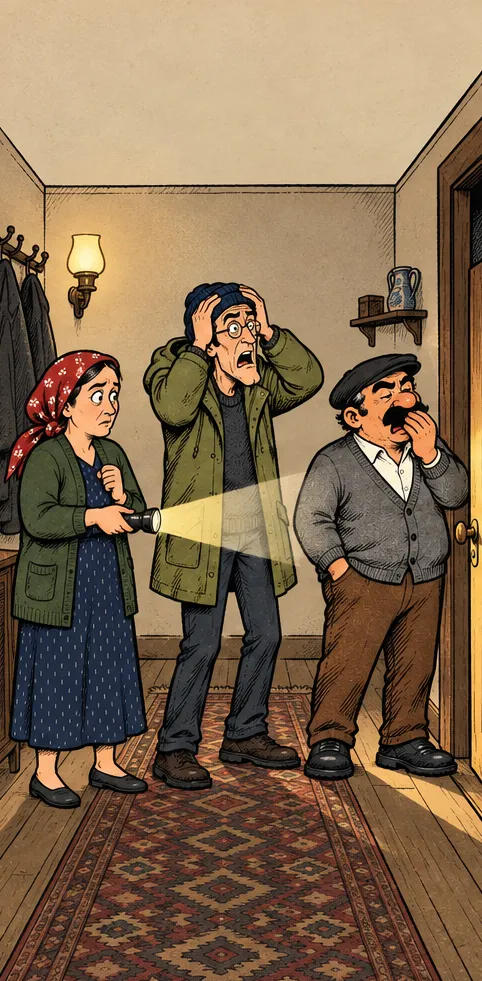
There’s a jinn in this house. The door creaks by itself. Prove there isn’t!
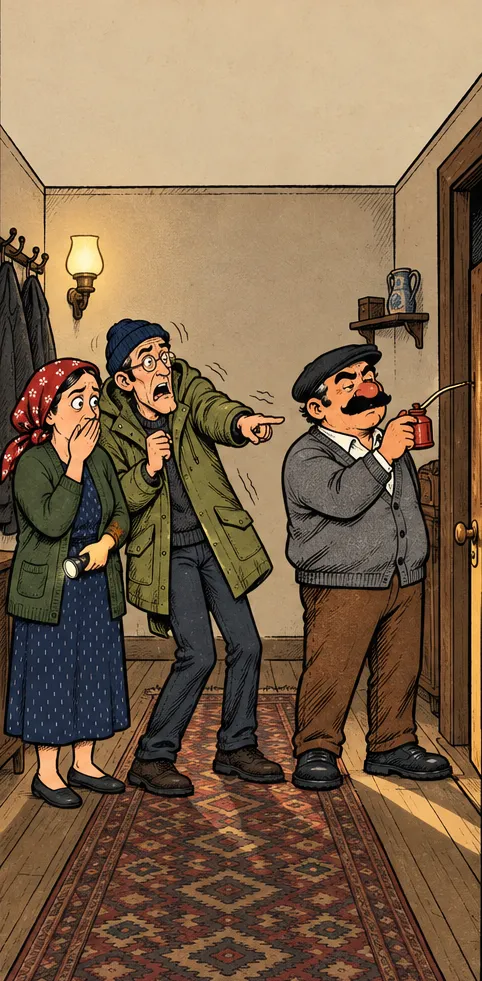
I can’t prove it! So there is one!
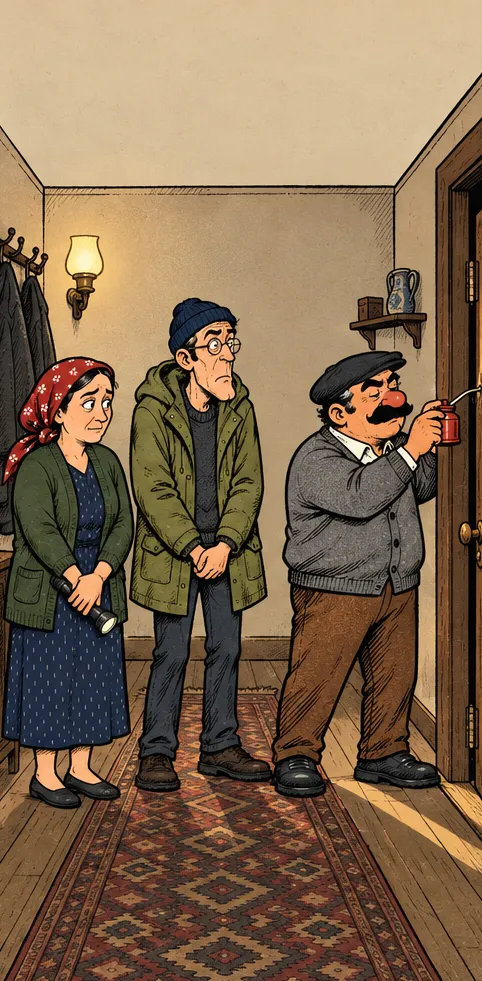
The one who says “there is” does the proving. Also, let’s oil that hinge.
What is it?
Counting something as true because it hasn’t been proven false, or false because it hasn’t been proven true. Absence of evidence isn’t evidence of absence, nor of presence. It means we don’t know.
The pattern
- Nobody has proven X false.
- Therefore X is true. (Or the reverse.)
Why it fails
The burden of proof sits with the person making the claim: whoever says “there is” shows it. Throwing the burden across the table hands the other side an impossible job; proving something exists nowhere is usually beyond anyone. Jinn, ghosts, secret plots: they all live in that gap. “Prove it isn’t” doesn’t win the argument; it locks it.
How to spot it
- The sentences “prove it’s false” or “you can’t prove otherwise”.
- The person making the claim asks for evidence instead of bringing it.
- A gap in knowledge is being used as if it were evidence.
What to say
“The burden’s on you; you’re the one saying it exists. What are you basing that on?” Accept the gap without filling it: “We don’t know. Not knowing isn’t the same as what you’re claiming.”
When it’s not a fallacy
Absence of evidence sometimes is evidence: when the search was thorough and the thing would have been found. I looked in the fridge, there’s no milk; that’s a valid inference. The presumption of innocence works the same way. The fallacy is declaring presence or absence for something nobody looked for, or nobody could.
Examples
- Health“Nobody has proven this bracelet doesn’t work.” Nobody has proven it does, except the seller.
- Work“No customer complained, so they’re satisfied.” Or they quietly went elsewhere.
- Tech“Can you prove my phone isn’t bugged?” No; and you can’t prove it is.
- Neighbours“How do you know the neighbour didn’t poison my cat?” I don’t; and we don’t know he did.