No. 36 Appeals to Emotion argumentum ad metum
Appeal to Fear
In Turkish: Korkutma Safsatası
You didn’t convince me, you frightened me. Being scared and being convinced aren’t the same thing.

Eat the spinach, İdris. If you don’t, you’ll end up in hospital and they’ll give you a huge injection!
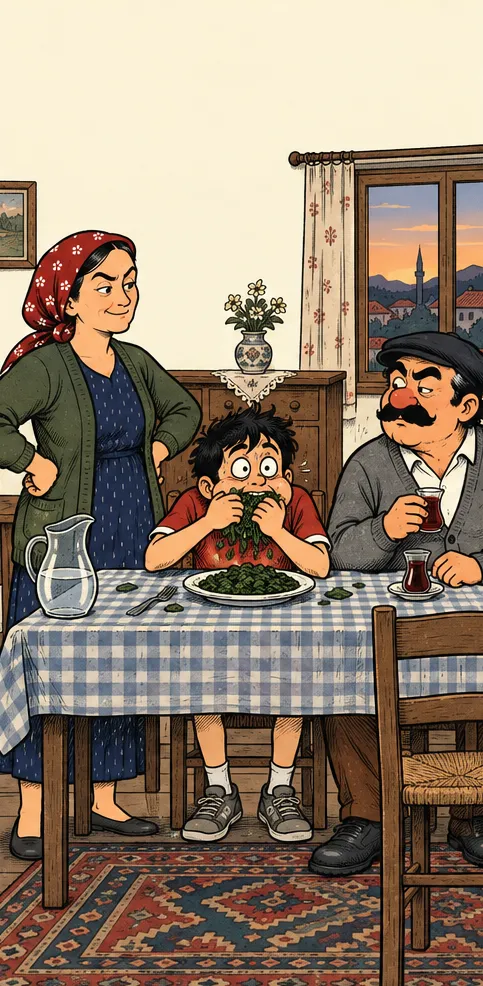
An injection?! I’ll eat it, I’ll eat it, all of it!
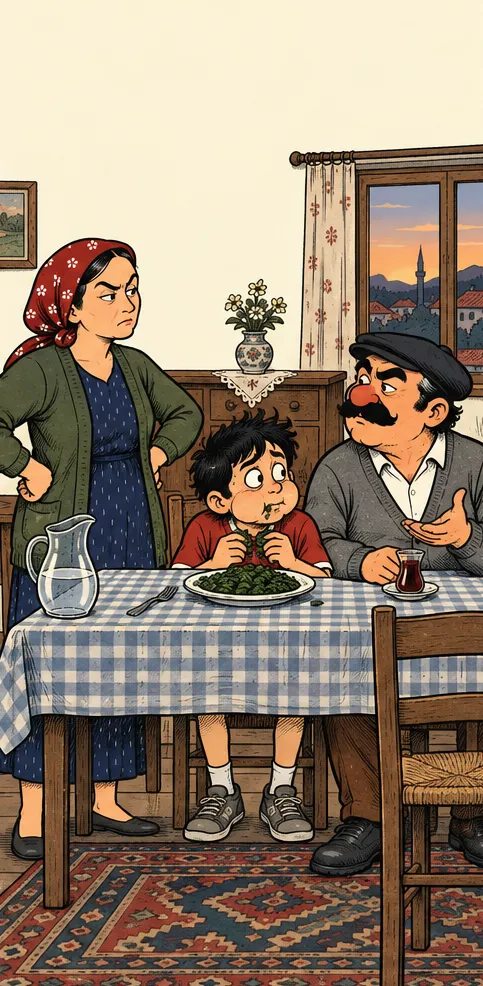
Tell him what spinach does for him, Fadime, don’t scare him with needles. The boy learned nothing about spinach, only about hospitals.
What is it?
Getting a claim accepted not with evidence but with the terrible things that will happen if you don’t. Unlike a threat, the speaker isn’t the one who’ll do the harm: the fear comes from outside, is usually inflated or invented, and its link to the claim is either missing or never shown.
The pattern
- If you don’t accept X (or do X), something terrible will happen.
- Therefore X is true / do X.
- (How likely the terrible thing is, and what it has to do with X, is never said.)
Why it fails
Fear stops thought; in a moment of danger, asking questions feels like a luxury. That’s why scaring people is the quickest way to silence a request for evidence: advertising, insurance sales, child-rearing and coffee-house talk are full of it. The fear may be real, even useful; but the size of a fear says nothing about the truth of a claim. Something can be terrifying and false.
How to spot it
- A description of catastrophe stands where the reason should be.
- The likelihood of the catastrophe is never given; only how terrible it would be.
- The link between the fear and the claim isn’t shown: “do this or it happens”, never why it would.
What to say
Turn the fear into a probability: “How often does this happen? To how many people?” Then ask about the link: “How does doing this prevent that?” A real danger has a number and a mechanism; without them all you’re holding is a shiver.
When it’s not a fallacy
Describing a real danger with its likelihood and its cause isn’t scaremongering, it’s a warning: “This road ices over in winter; three cars went off it last year.” Fear is sometimes exactly right. The fallacy is fear standing in for evidence, and acceptance being demanded before anyone asks how real the danger is.
Examples
- Ads“Skip this cream and your skin ages ten years early.” Nobody asks where the ten years came from; what the cream does is never explained either.
- ShoppingSalesman: “Every house without this alarm gets burgled.” If every one did, there’d be no houses left on the street; what the alarm does still hasn’t been said.
- WorkManager: “If we don’t adopt this system, the company shuts within a year.” Will it, why, and how does the system prevent it; none of it was discussed.
- Health“Stop taking that drug now, the neighbour’s cousin died of it.” What the cousin died of, and whether it was the drug, nobody knows. The fear rests on a rumour.