No. 20 Appeals to Emotion argumentum ad baculum
Appeal to Force
In Turkish: Tehdit Safsatası
“Agree, or else.” Fine, I agree. It’s still wrong.
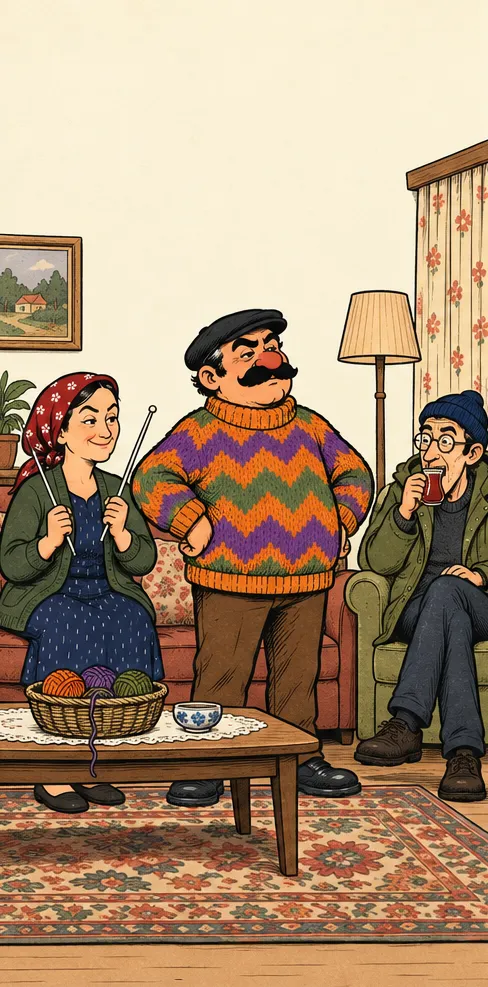
That jumper suits you, doesn’t it, Temel? Say it doesn’t and I never knit again.
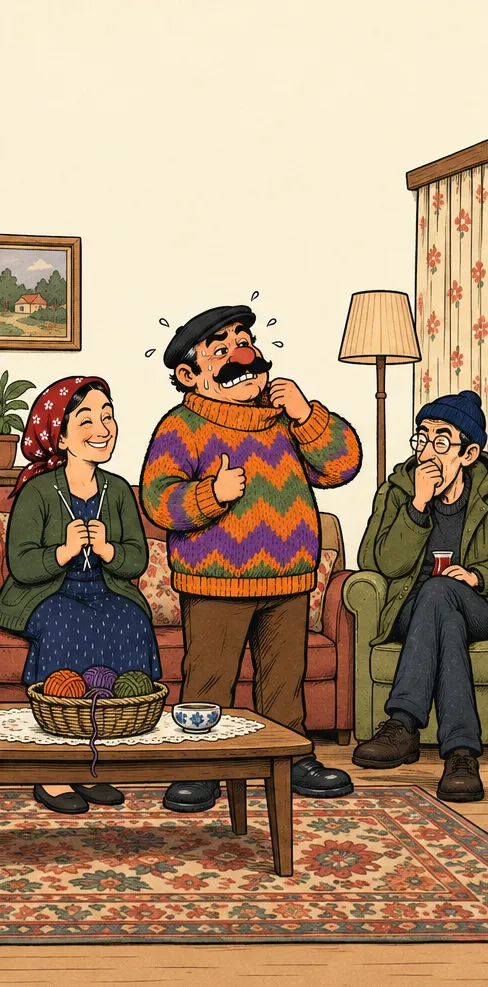
It… it suits me, Fadime. Never seen a jumper like it.
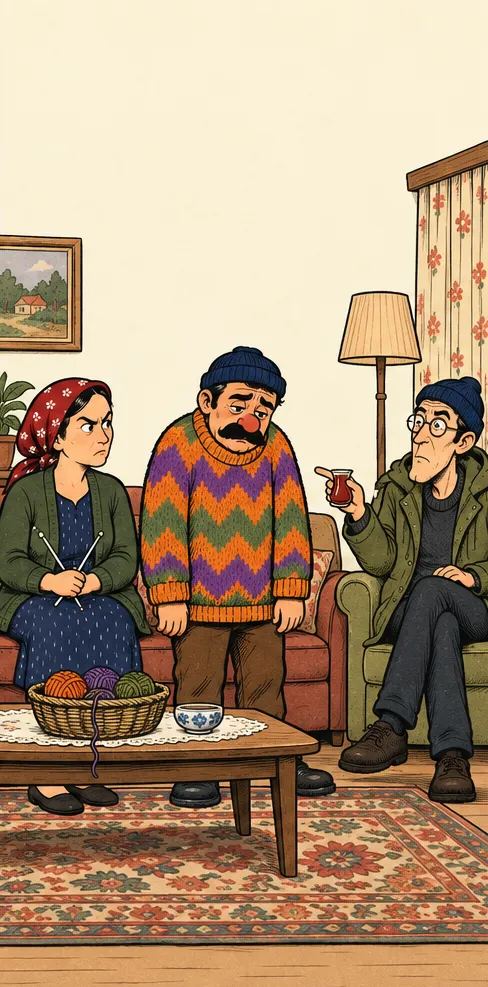
He said yes to the jumper. Did the jumper get any better? No. Fear doesn’t improve knitwear.
What is it?
Forcing a claim through with the cost of disagreeing rather than with evidence. The threat may be open (“or else”) or subtle (“you’d better not say that”). Neither is an argument.
The pattern
- Accept X.
- If you don’t, something bad happens.
- Therefore X is true.
Why it fails
A threat changes behaviour; it doesn’t change facts. The person who says “yes” out of fear hasn’t been convinced, they’ve gone quiet. The argument looks finished, but the claim is still unsupported and comes back at the first chance. Power can’t stand in for truth; it only postpones the conversation.
How to spot it
- There’s an “or else” in the sentence, spoken or not.
- The cost of disagreeing is described, not the reason for agreeing.
- Everyone seems to agree, and nobody asks why.
What to say
Separate the threat from the claim: “I understand the consequences. Now back to the claim: why is it true?” If it isn’t safe, stay quiet, but don’t count it as being convinced; reopen the claim later, somewhere safe.
When it’s not a fallacy
Pointing out the real consequences of an action isn’t a threat, it’s information: “drive the truck over this bridge and it collapses.” The consequence is about the claim itself. The fallacy is when the consequence has nothing to do with the claim and exists only to force acceptance.
Examples
- Work“If you don’t like this plan, maybe this team isn’t for you.” The plan still hasn’t been discussed.
- Family“Yes, you’re right, Mum.” Because if the argument goes on, dinner doesn’t appear.
- School“Anyone who doesn’t agree this course is useful knows what their grade will be.” Agreeing is mandatory; believing isn’t.
- Neighbours“That tree has to go, or I complain to the council.” Maybe it does; a complaint isn’t evidence about the tree.