No. 37 Attack Fallacies
Two Wrongs Make a Right
In Turkish: İki Yanlış Bir Doğru Etmez Safsatası
They did it to me, so I did it to them. Now there are two wrongs, and still no right.
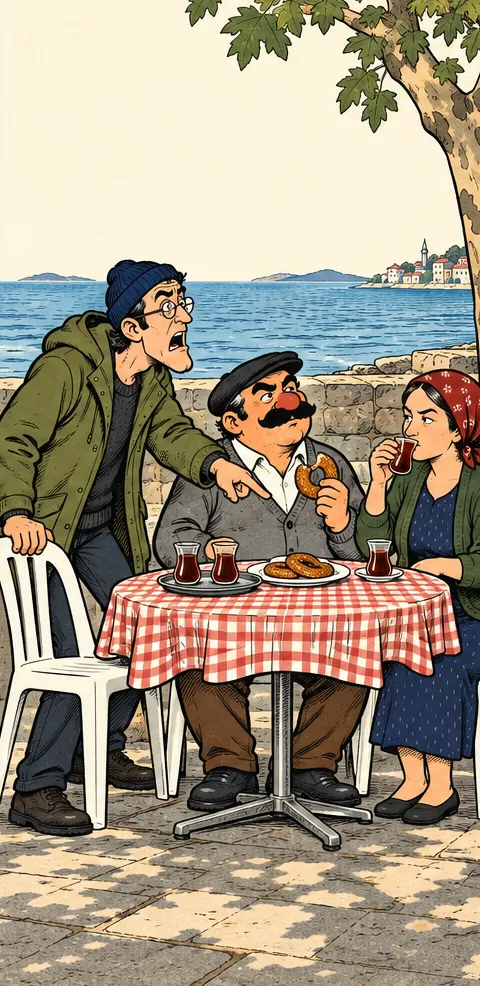
Temel, that’s my simit!
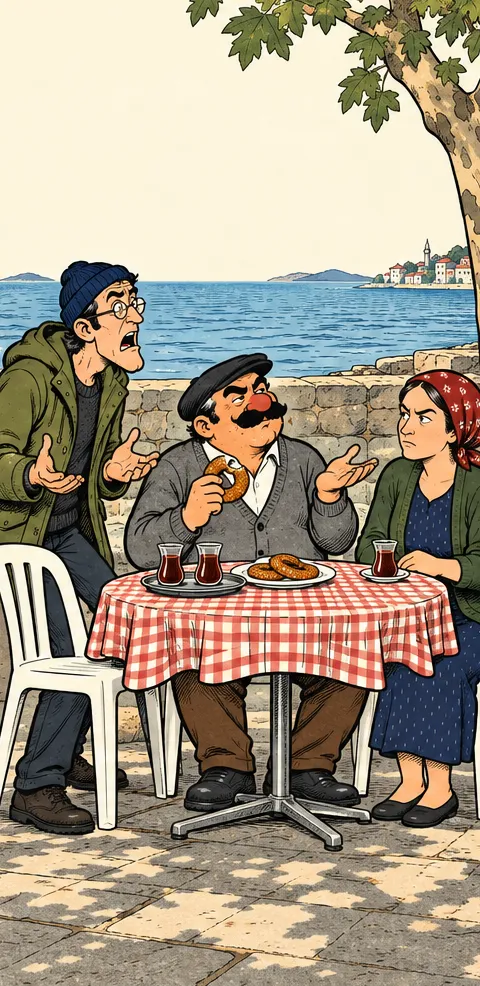
You drank my tea last week. We’re even.
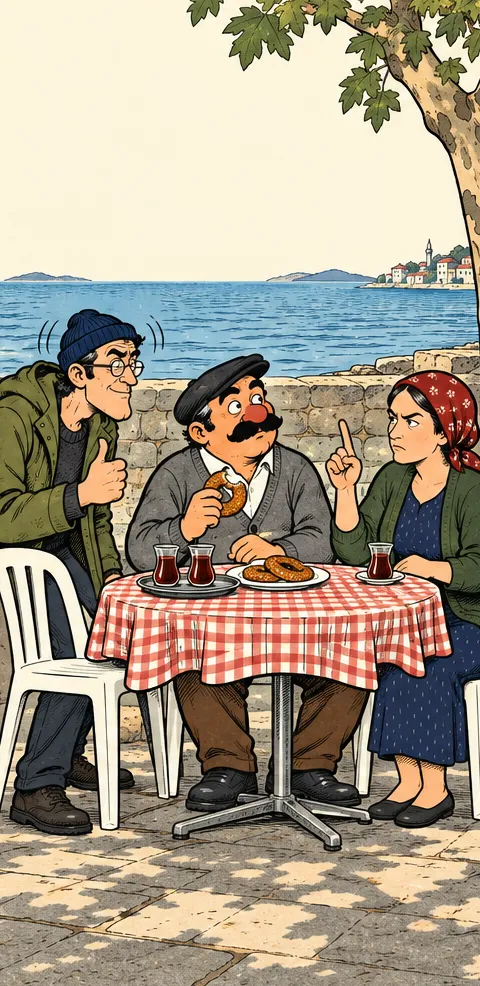
If his drinking your tea was wrong, your eating his simit is wrong too, Temel. Two wrongs don’t add up to a right.
What is it?
Justifying a wrong by pointing out that the other side did wrong too: “they did it to me first.” The first wrong may explain the second; it doesn’t excuse it. There are now two wrongs, and both are still standing.
The pattern
- A did X to me. (X is wrong.)
- I did X to A.
- Therefore what I did isn’t wrong.
Why it fails
Revenge feels like justice; the account seems settled. But what settles an account is putting the wrong right, not repeating it. This pattern is the sibling of the “you too” fallacy: there, “you do it too” dodges a criticism; here, “they did it first” licenses your own act. In both, the wrong itself never gets discussed.
How to spot it
- The wrong is defended not on its own terms but with someone else’s wrong.
- Phrases like “they did it first”, “we’re even”, “they had it coming”.
- Whether the act was right is never asked; only whether it was your turn.
What to say
Take the wrongs one at a time: “What they did was wrong, fine. Was what you did right?” If the answer starts with “but they…”, repeat the question. Then ask about the account: “Did this undo what they did, or are there two problems now?”
When it’s not a fallacy
Defending yourself, responding within what the law allows, or answering a wrong with a proportionate penalty isn’t the fallacy; there, the second act is justified as a measured, legitimate response to the first. The fallacy is treating someone’s wrong as a ticket for your own, with no question of proportion or legitimacy asked.
Examples
- Traffic“He didn’t let me in, so I leaned on the horn and cut him off.” If not letting someone in is wrong, so is cutting them off; now there are two bad drivers on the road.
- Work“Last time he presented my idea as his own, so this time I presented his.” The first theft explains the second; the second is still a theft.
- Family“My brother took my bike without asking, so I hid his tablet.” Mum rightly punished both; nobody accepted the second one as a right.
- Football“Their fans threw bottles at us last match, so we threw some this match.” Bottles flew in both matches; neither the referee nor the police were seen calling it a draw.