No. 40 Attack Fallacies
Appeal to Motive
In Turkish: Niyet Okuma Safsatası
You read my motive and skipped my claim. The fish’s eye is still cloudy.
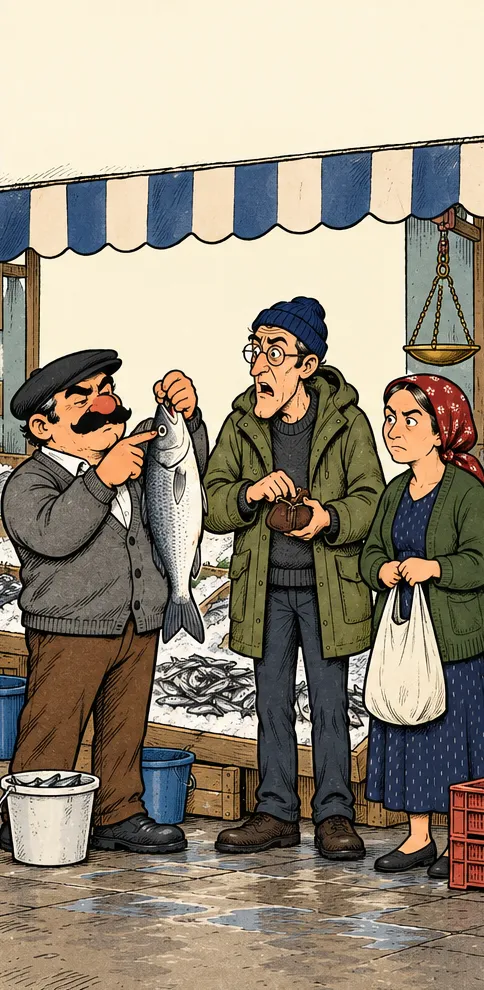
That fish isn’t fresh, Dursun, its eyes are cloudy. Don’t buy it.
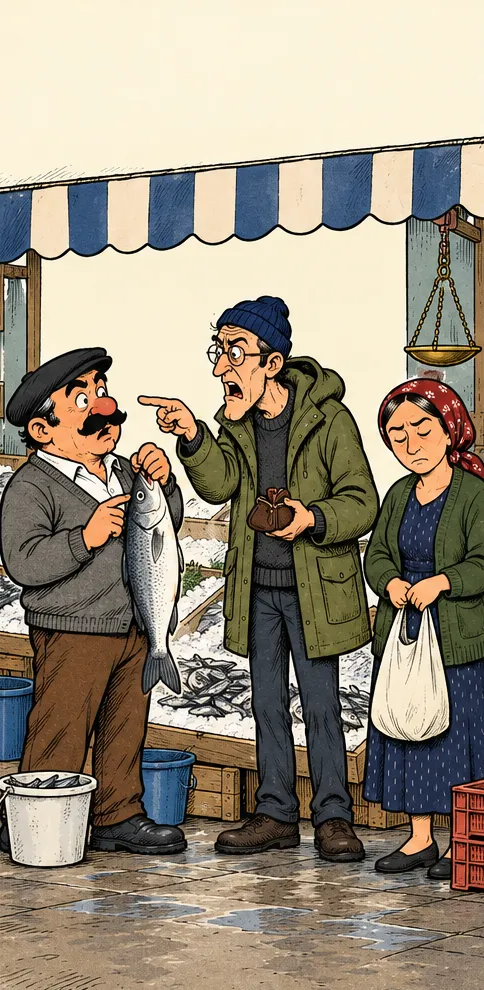
You only say that because you want to sell me your own fish!
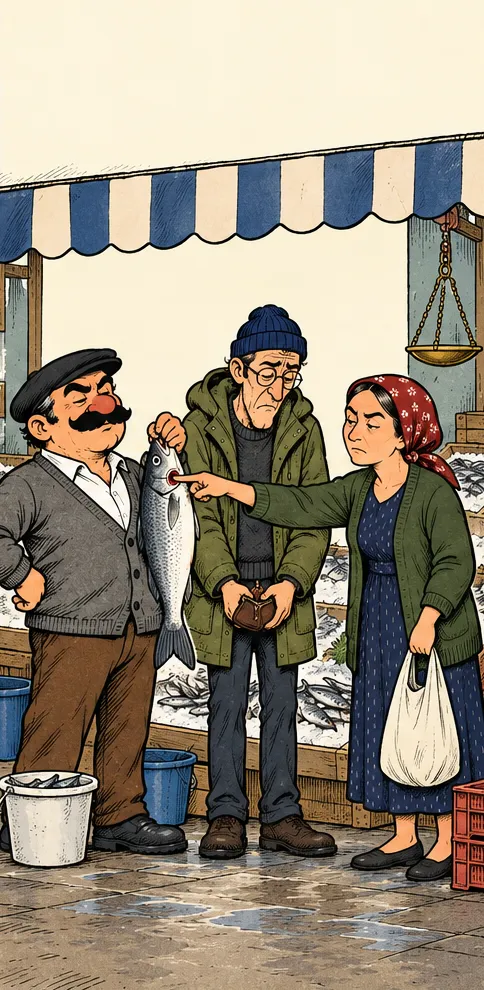
Whatever his motive, look at the fish’s eye, Dursun. It’s cloudy.
What is it?
Rejecting a claim because of the speaker’s motive or interest: “you only say that because it suits you.” Someone with an interest may be lying; they may also be telling the truth. A motive says something about where a claim comes from and nothing about whether it’s true.
The pattern
- A says X.
- A has an interest in saying X. (or: A’s motive is bad)
- Therefore X is false.
Why it fails
This is the polite ad hominem: it doesn’t call the person stupid, it calls them self-interested. It persuades because interest really does raise suspicion; the fishmonger praises the fish. But suspicion is a reason to check the claim, not to dismiss it. If what the interested party says is true, the interest doesn’t make it false. And the reverse holds: a well-meaning person can be wrong.
How to spot it
- The reply is about why the claim was made, not about the claim.
- Phrases like “of course he’d say that”, “it suits you”, “you’ve got an interest”.
- The motive is spoken of as if proven; usually it’s a guess.
What to say
Grant the motive and separate the claim: “Say I do have an interest. Is what I said false? How would we tell?” Evidence is independent of motive: the fish’s eye, the figure on the bill, the slope of the roof. Then remind them: “You’re guessing my motive; I’m showing you evidence.”
When it’s not a fallacy
Knowing a source’s interest is legitimate information for deciding how much to trust it: a drug company’s study earns less trust than an independent one and gets checked harder. That means “I’ll verify this myself”, not “it’s false”. The fallacy is pointing at the interest, skipping the verification, and counting the claim as already lost.
Examples
- Work“Accounting says cut the budget; of course, their own department isn’t being cut.” Maybe it isn’t; whether the budget is too big is still written in the numbers.
- Health“The doctor said quit smoking; he probably gets a commission from the drug companies.” Commission or not, what smoking does doesn’t depend on it.
- Neighbours“The neighbour said our roof is sagging; he obviously wants to buy our house cheap.” Maybe he does; the roof may still be sagging. A builder can tell in three minutes.
- Social media“The reviewer got the product for free, that’s why she praised it.” Getting it free explains the praise but doesn’t make the product bad; the claims in the review have to be checked one by one.