No. 24 Distraction Fallacies
Middle Ground
In Turkish: Orta Yol Safsatası
One said two, one said four. The answer isn’t three; look at the paper.
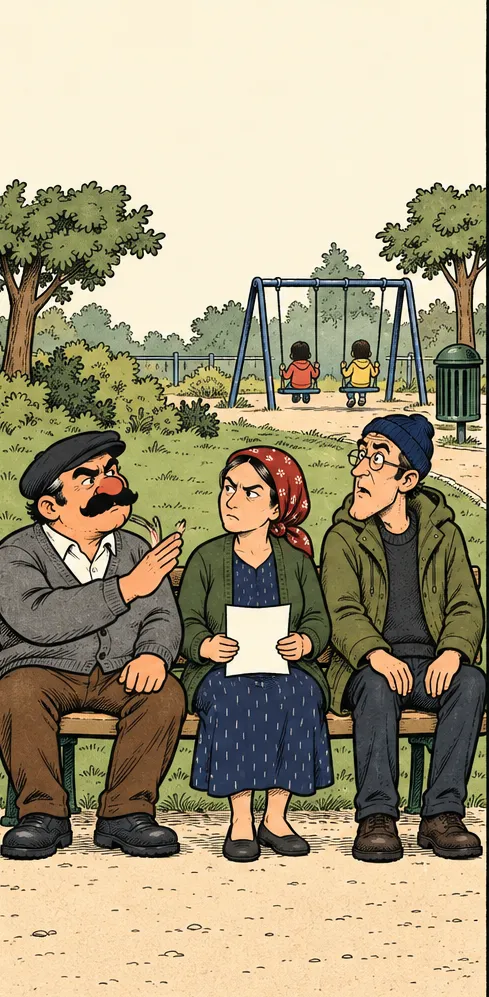
The water bill is two hundred lira, not a lira more.
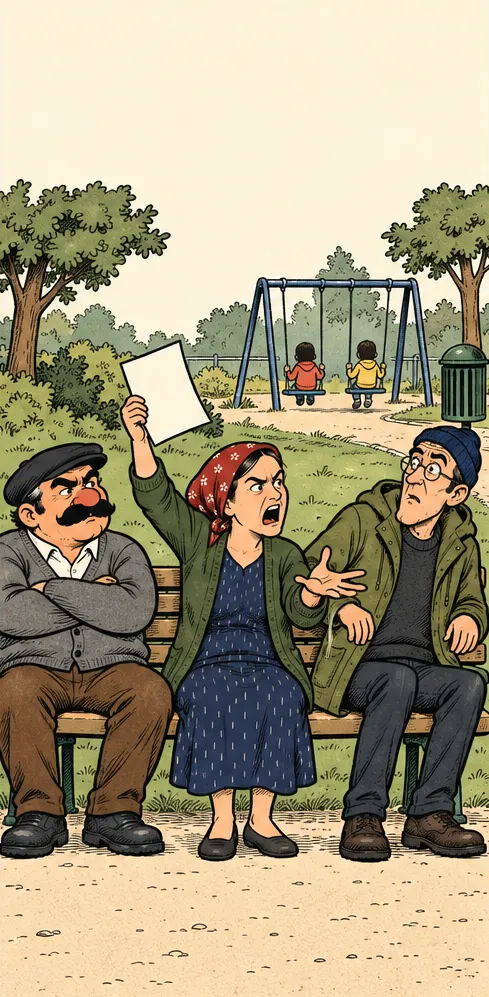
Four hundred! It’s on the paper, look!
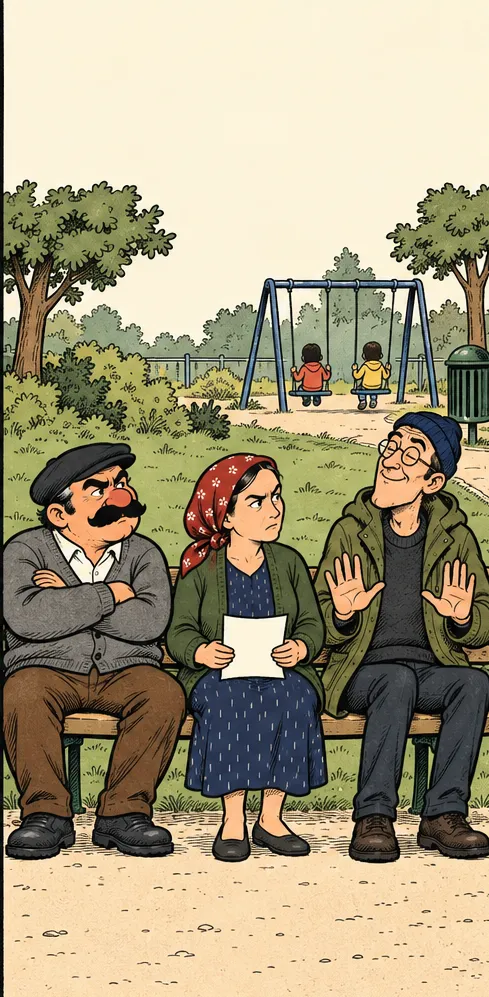
All right, all right. Let’s say three hundred, and everyone’s right.
What is it?
Taking the midpoint between two views as true simply because it’s in the middle. Compromise is a virtue, but truth isn’t found by haggling between the parties; if one side is right, the middle is wrong.
The pattern
- A says X. B says Y.
- Z is halfway between X and Y.
- Therefore Z is true.
Why it fails
The middle is the most comfortable way to end an argument: nobody loses outright, nobody gets angry. But if the bill is four hundred, three hundred is wrong; the midpoint between an extreme claim and a reasonable one rewards the extreme claim by half. Whoever knows this exaggerates first and then says “let’s meet in the middle”.
How to spot it
- The phrases “let’s meet in the middle”, “you’re both right”, “let’s find a middle way”.
- The midpoint is chosen without the two sides’ evidence ever being compared.
- One side opened with an exaggeration, and the average drifted toward it.
What to say
“Why would the middle be true? Which side has the evidence?” Then ask for the concrete thing: “Let’s see the bill.” If the evidence is clear there is no middle; if there’s no evidence, standing in the middle isn’t knowledge either, just a bargain.
When it’s not a fallacy
Where the question is preference or negotiation, the middle is legitimate: a price, a holiday plan, a bedtime. There’s no right answer there, only agreement. And sometimes the evidence genuinely sits between two extremes; then the middle rests on evidence, not on positions. The fallacy is looking at positions instead of evidence on questions of fact.
Examples
- Work“The project takes a month.” “Six months.” The manager: “Put down three and a half.” The project doesn’t know that.
- Family“He didn’t do his homework.” “He did.” “Let’s say he did half.” The notebook is empty.
- Health“The vaccine is safe.” “The vaccine is poison.” “There’s probably some harm.” The data don’t sit in the middle; they sit on one side.
- ShoppingThe seller says a thousand, you say five hundred, you settle at six-fifty. That’s the outcome of the haggle, not the value of the thing.